Source Metal Dome Switch for Home Appliance, Calculator, Camera
Find and compare 30 Metal Dome Switch options from verified Chinese suppliers. Buyers can evaluate customization, certifications like ISO and CE, and applications for home appliances, calculators, and cameras based on available specifications.
Key considerations
Products List


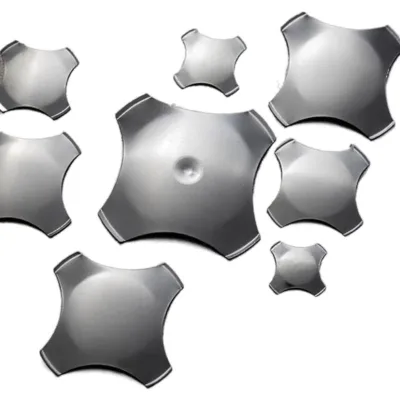
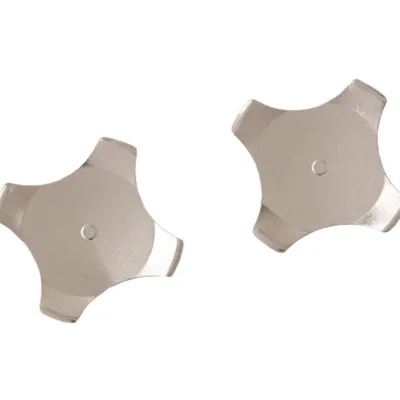
Diamond Factory Custom Metal Dome Membrane Switches with Graphic Overlay
$2.60 - $3.00
MOQ: 100 Pieces


Comprehensive Sourcing Guide
Strategic Sourcing Guide for Metal Dome Switches
Understanding Technical Specifications and Material Composition
When sourcing metal dome switches, buyers must first establish a clear understanding of the technical specifications that define product performance. The core component of these switches is the metal dome itself, which provides the tactile feedback and electrical contact closure. However, the surrounding materials and structural design are equally critical for ensuring longevity and reliability in specific environments. Based on available product data, the substrate material for many of these switches is identified as PET (Polyethylene Terephthalate). This material choice is significant because PET offers a balance of flexibility, durability, and resistance to environmental factors, making it suitable for various applications ranging from home appliances to telecommunication equipment.
The structural configuration of the switch is another primary specification to evaluate. Products in this category are often categorized by their physical form, such as "Flat" or "Flexible." Flexible variants are particularly valuable for applications requiring conformability to curved surfaces or tight spaces within electronic assemblies. The contact type is another vital technical parameter; some listings specify "Type c Contact," which implies a specific geometry for the electrical connection that may influence current handling and signal integrity. Furthermore, the circuitry often relies on conductive silver ink, a common method for creating the necessary electrical pathways on the flexible substrate. Buyers should verify the thickness and conductivity of this ink layer, as it directly impacts the switch's resistance and overall electrical performance.
The number of switches per unit is also a key specification. Many products are described as "Multi Control Switch" units, indicating that a single assembly can handle multiple input points. This is essential for complex user interfaces found in calculators, cameras, and remote controls. The physical dimensions and shape are often customizable through OEM services, allowing buyers to tailor the product to specific enclosure requirements. Additionally, the surface finish supports color and icon printing, which is crucial for branding and user interface clarity. The use of silk screen printing is a standard method for applying these graphics, ensuring that the text and symbols remain legible and durable over the product's lifecycle.
Compliance, Certification, and Regulatory Standards
Navigating the compliance landscape is a non-negotiable aspect of sourcing metal dome switches, particularly for products destined for international markets. The supply chain data indicates a range of certifications that buyers should verify with their potential suppliers. Common certifications observed in this sector include ISO, CE, and CCC. The presence of ISO certification suggests adherence to international management system standards, which often correlates with consistent manufacturing processes. CE marking indicates conformity with health, safety, and environmental protection standards for products sold within the European Economic Area, while CCC (China Compulsory Certification) is mandatory for products sold within China.
It is important to distinguish between the certifications explicitly listed in product data and those that are merely background knowledge. While standards like ASTM A666, RoHS, and REACH are frequently associated with electronic components, they should not be assumed to apply to every listing unless explicitly confirmed by the supplier. Buyers must treat certification status as a variable that requires direct verification rather than a universal attribute of the category. For instance, some product listings explicitly mention "ISO" alongside "SGS," indicating third-party validation, while others list "CE, ISO" together. The absence of a specific certification in a product description does not necessarily mean the product is non-compliant, but it does mean the buyer must request documentation to confirm the status.
In addition to product-level certifications, the manufacturing standards of the supplier play a crucial role. Some listings reference "customized" standards, which implies that the product may be built to meet specific client requirements rather than a rigid industry standard. This flexibility is advantageous for niche applications but requires a more rigorous vetting process to ensure that the custom standard still meets safety and performance expectations. Buyers should also be aware of the "20g" standard mentioned in some contexts, which likely refers to a specific weight or force specification for the dome actuation, though this requires clarification from the supplier to ensure it aligns with the intended application.
Cost Drivers and Pricing Dynamics
The pricing structure for metal dome switches is influenced by a complex interplay of factors, including material costs, customization levels, and order volume. The observed price range in the market spans from $0.01 to $15 per unit, a wide spectrum that reflects the diversity of product configurations and order quantities. At the lower end of this range, buyers can expect standard, off-the-shelf products with minimal customization and high-volume production runs. Conversely, the higher price points are typically associated with specialized designs, complex multi-control configurations, or small batch orders that require unique tooling.
Minimum Order Quantity (MOQ) is a significant driver of unit cost. The data indicates an MOQ range of 1 to 1000 units. Suppliers offering an MOQ of 1 are likely catering to prototyping or low-volume needs, but this convenience often comes with a higher per-unit cost. As the order volume increases toward the 1000-unit mark, the economies of scale usually result in a reduction of the unit price. Buyers must balance their immediate needs with long-term cost efficiency; ordering larger quantities upfront can significantly lower the average cost, but it also increases inventory holding costs and financial risk.
Customization is another major cost factor. While the product data confirms that customization is available for logos, designs, colors (Pantone, Ral, Cmyk), and dimensions, these services invariably add to the base price. The cost of setting up new printing dies, molds, or production lines for custom features must be amortized over the order quantity. Additionally, the choice of materials, such as the specific grade of PET or the type of adhesive used (e.g., 3M 9449, 3M 467, 3M 468, 3M 200), can influence the final cost. High-performance adhesives or specialized conductive inks may command a premium. Buyers should request detailed cost breakdowns that separate the base product cost from customization fees to make informed decisions.
Typical Applications and Usage Scenarios
Metal dome switches are versatile components found across a wide array of industries, with their primary application areas including home appliances, telecommunication equipment, and consumer electronics. The data highlights specific use cases such as control switches, change-over switches, disconnectors, and playback switches. In the home appliance sector, these switches are often used for user interface controls on devices like washing machines, microwaves, and coffee makers, where durability and tactile feedback are essential.
The telecommunications and electronics sectors also rely heavily on metal dome switches. They are integral to the operation of calculators, cameras, and remote controls, where space is often limited, and reliability is paramount. The "With Remote Control" application suggests their use in wireless devices where a robust, low-profile switch is needed to transmit signals. Furthermore, the "Industrial, Electronics, Medical, Measurement" usage categories indicate that these switches are employed in environments that demand high precision and reliability. In medical devices, for example, the switches must be easy to clean and resistant to chemicals, while in measurement equipment, they must provide consistent electrical contact without drift.
The functional attributes of the switches, such as being waterproof, dustproof, and UV resistant, make them suitable for harsh environments. The "Enclosed and Waterproof" feature is particularly valuable for outdoor equipment or devices that may be exposed to moisture. The use of specific adhesives like 3M series tapes ensures that the switches remain securely attached even under vibration or thermal stress. Buyers should match the specific application requirements with the switch's functional capabilities; for instance, a switch intended for a medical device should prioritize hygiene and chemical resistance, while one for a remote control should focus on tactile feel and signal transmission speed.
Supplier Evaluation and Quality Control Protocols
Evaluating suppliers for metal dome switches requires a systematic approach that goes beyond price comparisons. The origin of the products is a key factor, with many listings indicating production in China, specifically in regions like Dongguan. While this region is a major hub for electronics manufacturing, buyers should verify the specific capabilities and reputation of the factory. The presence of certifications like ISO and SGS can serve as indicators of a supplier's commitment to quality management, but these should be validated through recent audit reports or certificates.
Quality control protocols are essential to ensure that the delivered products meet the required specifications. Buyers should inquire about the supplier's inspection processes, including incoming material checks, in-process quality control, and final product testing. The "Detection Method" for some products is listed as "Reflection Type" or "Retro-reflective Mode," which suggests that optical testing may be part of the quality assurance process. Additionally, the "Conductive Silver Ink" circuitry should be tested for resistance and continuity to ensure reliable electrical performance.
The packaging of the products is another aspect of quality control. Listings mention "Protective Package," "Carton," and "Polybag/Cartoon Box" as common packaging methods. Proper packaging is crucial to prevent damage during transportation, especially for flexible switches that can be easily creased or torn. Buyers should ensure that the packaging includes sufficient cushioning and that the products are stored in a controlled environment to prevent degradation of the adhesive or materials. The "Transportation" options, including by ship, air, or land, should be evaluated based on the urgency of the order and the fragility of the product.
Long-Term Procurement and Supply Chain Considerations
Sourcing metal dome switches is not just a one-time transaction but a long-term relationship that requires careful planning. The "Customization" attribute suggests that many buyers will need to work closely with suppliers to develop products that meet their specific needs. This collaboration requires clear communication and a shared understanding of technical requirements. Buyers should establish a framework for ongoing communication to address any changes in design or production needs.
Lead times and production capacity are critical factors for long-term procurement. While specific lead times are not provided in the data, buyers should request this information from suppliers to ensure that they can meet their production schedules. The ability of the supplier to scale production up or down based on demand is also important. Suppliers with a flexible manufacturing setup can better accommodate fluctuations in order volume, reducing the risk of stockouts or excess inventory.
Sustainability and environmental compliance are increasingly important considerations in procurement. While specific standards like RoHS and REACH are not universally confirmed in the data, buyers should inquire about the environmental impact of the materials used, particularly the adhesives and inks. Ensuring that the products are compliant with relevant environmental regulations can help avoid legal issues and enhance the brand's reputation. Finally, buyers should consider the total cost of ownership, including the cost of maintenance, replacement, and potential downtime, when selecting a supplier for metal dome switches.
FAQs
What materials are commonly used for metal dome switches?
The substrate material is typically PET, which offers flexibility and durability. This material supports conductive silver ink circuits and is suitable for home appliances and telecommunication equipment.
Which certifications are available for these switches?
Common certifications include ISO, CE, CCC, and SGS. Buyers should verify specific documentation as certification status varies by product listing and supplier rather than being universal.
Can the switches be customized for specific applications?
Yes, customization is available for logos, designs, colors, and dimensions. Suppliers offer OEM services to tailor the product to specific enclosure requirements and branding needs.
What is the typical price range for metal dome switches?
The observed price range spans from 0.01 to 15 USD per unit. Costs vary based on customization levels, order volume, and specific material or adhesive requirements.
Where are these products typically manufactured?
Products originate primarily from China, with specific production noted in Dongguan. Buyers should verify the exact factory location and capabilities during the supplier evaluation process.
How are the switches packaged for transport?
Packaging options include protective packages, cartons, and polybags with cartoon boxes. Proper packaging is essential to prevent damage to flexible switches during shipping by ship, air, or land.
What adhesive options are used for mounting?
Adhesives such as 3M 9449, 3M 467, 3M 468, and 3M 200 are commonly used. These ensure the switches remain securely attached even under vibration or thermal stress.